

2025 Reports Shows Voluntary Efforts Deliver Major Reductions in Whale Strike Risk, Noise, and Air Pollution

Ocean sound levels were lower during the BWBS 2025 VSR season, with reduced ambient noise and clearer whale vocalizations observed when the program was active.
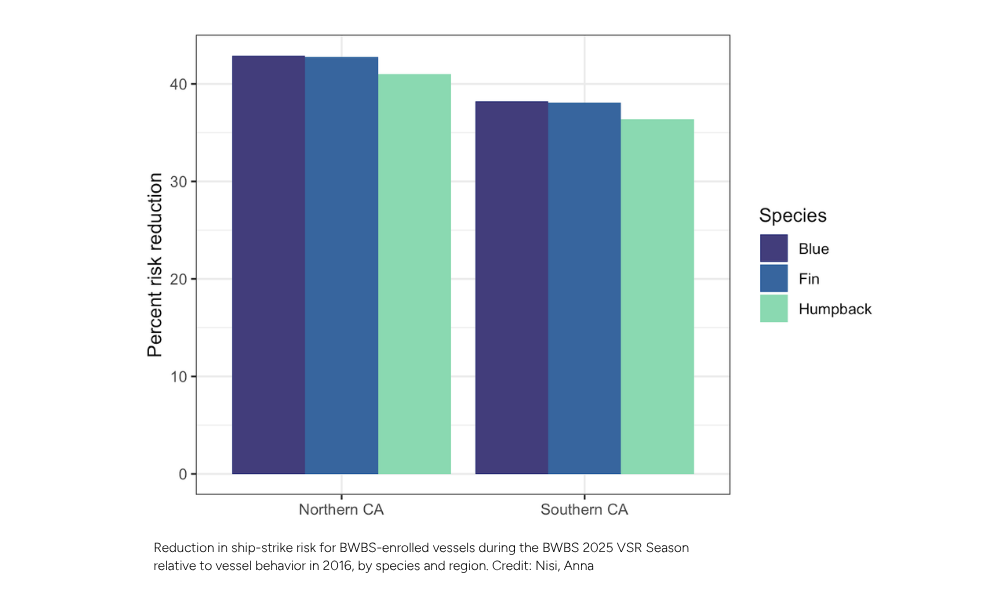
Ship-strike risk for blue, fin, and humpback whales decreased by about 36–43% during the 2025 VSR season compared to 2016 across Northern and Southern California.
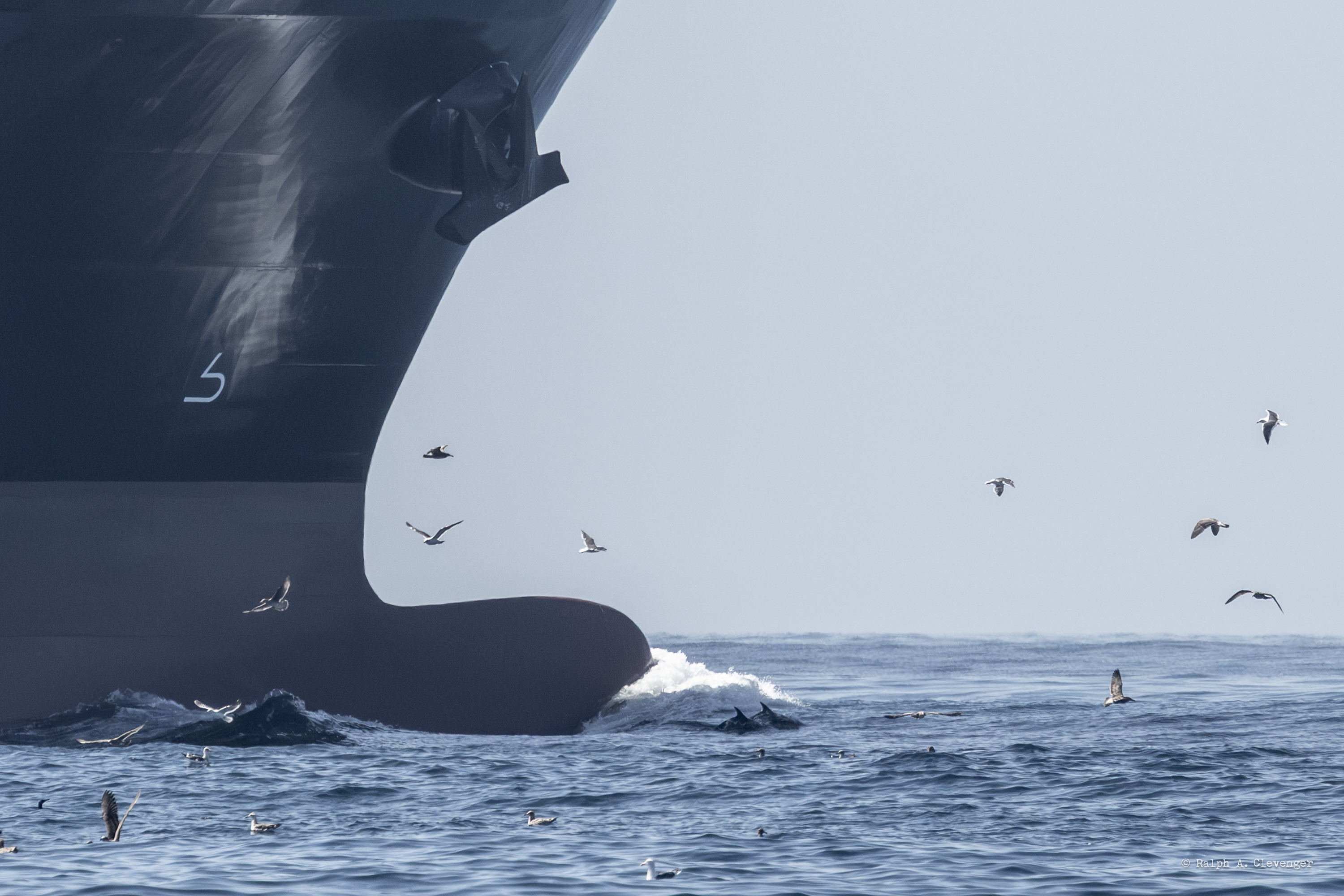
Credit: Ralph A. Clevenger; taken in the Santa Barbara Channel October 2025
Blue Whales and Blue Skies 2025 environmental analyses show major reduction in strike risk, underwater noise, and air pollution affecting coastal California.
CA, UNITED STATES, April 2, 2026 /EINPresswire.com/ -- Researchers verified that the 2025 Protecting Blue Whales and Blue Skies (BWBS) program resulted in:- More than 55,000 metric tons of greenhouse gas emissions avoided
- A 40% reduction in fatal ship strike risk to whales
- A 70% reduction in underwater radiated noise acoustic intensity
BWBS works with global shipping lines, including container, bulk, tanker, car carriers, and, beginning in 2026, cruise lines, to reduce speeds to 10 knots or less along California’s coast. Vessel Speed Reduction (VSR) is a proven way to protect coastal communities’ public health, reduce risks to endangered and threatened whales, and limit underwater radiated noise pollution.
During the 2025 VSR season, 787 vessels across 44 global shipping lines voluntarily reduced speeds over 481,000 nautical miles in designated zones along California’s coast. For more detailed information on the top-performing shipping lines and their 2025 award rankings, see here, and further below.
After each VSR Season, BWBS analyzes vessel Automatic Identification System (AIS) data to assess fleet cooperation and quantify environmental outcomes. For the 2025 VSR Season, results can be found here.
Ship Strike Risk Reduction:
Research led by Dr. Anna Nisi of the Center for Ecosystem Sentinels at the University of Washington found that participating BWBS vessels reduced fatal ship strike risk to blue, fin, and humpback whales by 40% compared to a 2016 baseline.
This analysis integrated the latest peer-reviewed work (Garrison et al. 2025) that quantifies the relationship between vessel speeds and collision mortality. “Reducing speed remains critical in lowering the likelihood of collisions by giving whales more time to avoid approaching ships," said Dr.Nisi. " The reductions in risk due to cooperation with VSR in the 2025 season are substantial and meaningfully protect the endangered and threatened whale populations in California waters.”
Ship strikes and entanglement remain the leading causes of whale mortality globally.BWBS focuses on reducing this risk during periods of peak whale presence in California waters. This benefit scales with the number of participating vessels and total distance traveled at safer speeds.
Air Quality & Greenhouse Gas Emission Reductions:
Research partner Starcrest Consulting Group, LLC analyzed emissions reductions for the 2025 VSR season. The analysis shows the program resulted in estimated reductions of:
- 1,491 tons of nitrogen oxides (NOx), which contribute to the formation of ground-level ozone, also known as smog
- 8.9 tons of diesel particulate matter (DPM), which is considered an air toxic
- 37 tons of oxides of sulfur (SOx)
- 55,771 metric tons of greenhouse gases (carbon dioxide equivalent)
Large oceangoing vessels are a significant source of air pollution along California’s coast. These vessels emit NOx and other combustion-related pollutants, such as particulate matter (PM), SOx, and greenhouse gases. Slower vessel speeds reduce engine load and fuel consumption, typically lowering emissions by 20 to 25 percent.
With California’s onshore prevailing winds, emissions from oceangoing vessels often affect coastal communities, contributing to exceedances of the state and federal air quality standards designated to protect human health. Most air quality standard exceedances for ground-level ozone occur during the warmer months, making cooperation with VSR during this time period especially critical to reducing emissions and protecting public health.
Underwater Noise Pollution:
Dr. Vanessa ZoBell from the Scripps Institution of Oceanography found that, across all VSR zones, the overall program reduction in underwater radiated noise for the 2025 VSR Season was 5.2 dB, equivalent to a 70% reduction in acoustic intensity.
Dr. ZoBell explains how these results shape the underwater acoustic world of a whale: “When ships are quieter, their noise pollution footprint contracts. That means ship noise propagates over a smaller area of the ocean, reducing the number of animals exposed to noise pollution. Additionally, for any whales within a passing ships' noise footprint, VSR reduces the sound pressure, which is a critical measure for biological exposure.”
Sound travels approximately four times faster in the water than by air. Whales have evolved over millions of years to use sound as their primary mode of perceiving the world. They use sound to navigate, forage and communicate, among other daily life functions. Excessive noise pollution disrupts these essential behaviors, threatening whales’ ability to thrive. Implementing vessel speed reduction programs in regions with high whale presence is a crucial step in mitigating the harmful effects of chronic noise pollution to protect these species.
Participating Shipping Lines:
BWBS is proud to recognize the achievements of the participating shipping lines that make these environmental benefits possible. For the 2025 season, those shipping lines were:
Sapphire Award Winners: CMA CGM; MSC; COSCO; NYK-RoRo; Yang Ming; OOCL; Hapag-Lloyd; Marathon Petroleum; OSG Ship Management; ConocoPhillips Polar Tankers; CSL Americas; Wan Hai Lines; Scorpio Group; Seaspan Corporation; Swire Shipping; BP Shipping Ltd.; Campbell Shipping Company; GoldenKing Ship Management Co.; Toyofuji Shipping Co.; Unity Ship Management; Hakuyo Kisen KK; and Nhat Viet Transportation Corporation.
Gold Award Winners: Maersk; ONE; Evergreen; Mol ACE; Wallenius Wilhelmsen; Liberty Maritime; Eastern Pacific Shipping; Unisea Shipping Ltd; Canfornav; and Weihai Weitong Marine Shipping Co.
Blue Sky Award Winners: Hyundai (UCC); K Line; Hyundai Glovis; D’Amico Group; Swire Bulk; Champion Tankers AS; Anglo-Eastern Shipmanagement; MT Maritime Management USA; Asan Merchant Marine Co. LTD; and Shih Wei Navigation.
Participants: Pacific Basin and Gulf Energy Maritime.
About Blue Whales and Blue Skies:
Protecting Blue Whales and Blue Skies is a collaborative partnership among government agencies, foundations, and environmental organizations working toward safer whales, cleaner air, and a quieter ocean.
Partners include the California Marine Sanctuary Foundation; Santa Barbara County, Ventura County, San Luis Obispo County; Northern Sonoma County and San Diego County Air Pollution Control Districts; Bay Area Air Quality Management District; Monterey Bay Air Resources District; Channel Islands, Monterey Bay, Greater Farallones, and Cordell Bank National Marine Sanctuaries; and Benioff Ocean Science Laboratory.
Becca Tucker
Protecting Blue Whales and Blue Skies
email us here
Legal Disclaimer:
EIN Presswire provides this news content "as is" without warranty of any kind. We do not accept any responsibility or liability for the accuracy, content, images, videos, licenses, completeness, legality, or reliability of the information contained in this article. If you have any complaints or copyright issues related to this article, kindly contact the author above.
